
In pre-Columbian times, the territory that currently corresponds to the canton of Buenos Aires was inhabited by indigenous people from the so-called group of the Bruncas or Borucas, a fact that is verified by the numerous cemeteries that have been found in various places in the region.!
The first school was established in 1890 in the administration of Don José Joaquín Rodríguez Zeledón, as Buenos Aires School; Some time later he was baptized with the name of Don Rogelio Fernández Güell, a journalist who fought against the tyranny of the Tinoco brothers (1917-1919) and died in Buenos Aires on March 14, 1918. The Professional Technical College of Buenos Aires began its teaching activities in 1971, in the second administration of Don José Figueres Ferrer.
The first hermitage was built in 1902 in Térraba. In 1905, in the town of Buenos Aires, the church dedicated to San Pedro Apóstol was built. In the Archbishopric of Monsignor Don Román Arrieta Villalobos Fifth Archbishop of Costa Rica In 1982, the parish was erected, which is currently a suffragan of the Diocese of San Isidro de El General of the ecclesiastical province of Costa Rica.
In the administration of Mr. Alfredo González Flores, on June 26, 1914, in Law No. 31, the title of Villa was granted to the population of Buenos Aires, which was designated as the head of the Osa canton created on that occasion, it was the number three from the province of Puntarenas. Subsequently, in Law No. 4574 of May 4, 1970, the Municipal Code was promulgated, which, in its third article, gave the town the category of city, for being the head of the canton. Electric lighting was inaugurated in 1935, in the third administration of Don Ricardo Jiménez Oreamuno.
In 1961, as a result of the opening of the Inter-American Highway between the cities of San Isidro de El General and Buenos Aires, the region experienced an increase in the population due to the arrival of emigrants from the Central Valley.
In 1961, as a result of the opening of the Inter-American Highway between the cities of San Isidro de El General and Buenos Aires, the region experienced an increase in the population due to the arrival of emigrants from the Central Valley.
The origin of the name is due to Don Pedro Calderón, when in 1860 he passed through the place, opening a path that communicated Carthage with the towns of Térraba and Boruca, baptizing the site called Hato Viejo, with the one in Buenos Aires. The new name was possibly given by the constant breeze that blows in the area, such as the air currents that come from the Pacific Ocean, and in summer the winds from north to south, which are strong.
The main tourist areas of the canton are located in the district of Biolley, from where you can enter the La Amistad International Park and all the indigenous territories that exist in its territory, namely:
- Salitre Indigenous Territory (Etnia Bribri)
- Indigenous territory of Cabagra (Etnia Bribri)
- Indigenous territory of Ujarras (Etnia Cabécar)
- Boruca indigenous territory (Etnia Boruca)
- King Curré Indigenous Territory (Etnia Boruca)
- Terraba or Teribe indigenous territory (Etnia Terraba or Teribe)
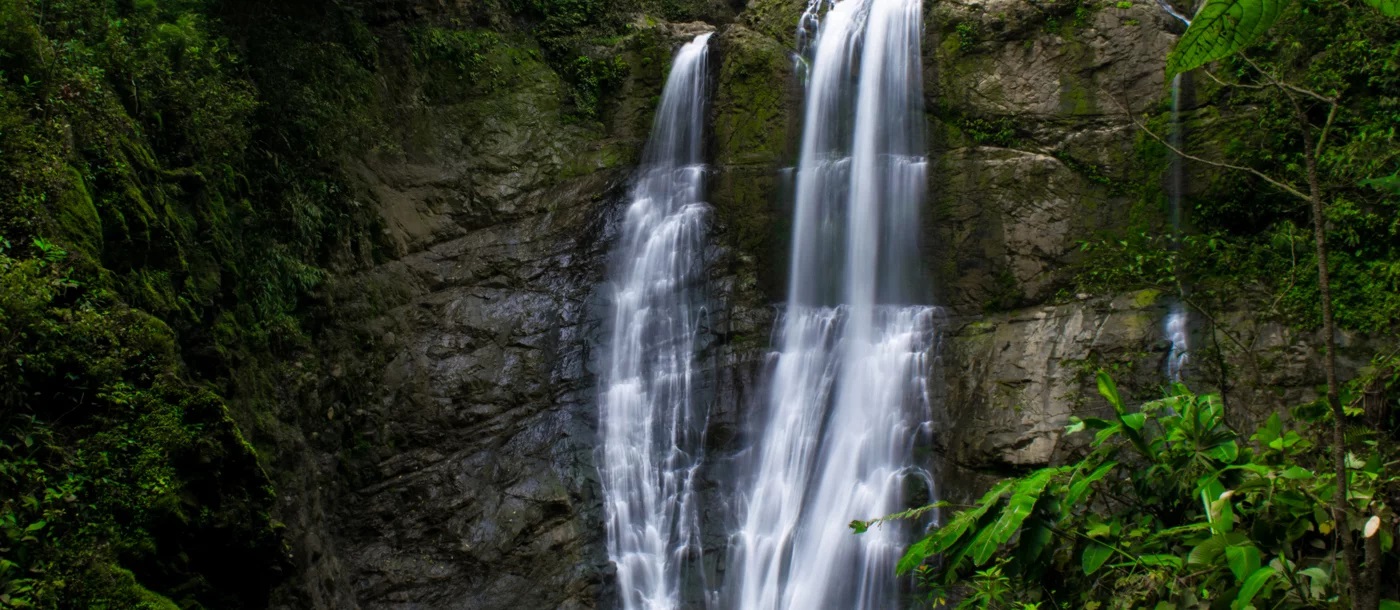
Catarata La Chica en Boruca